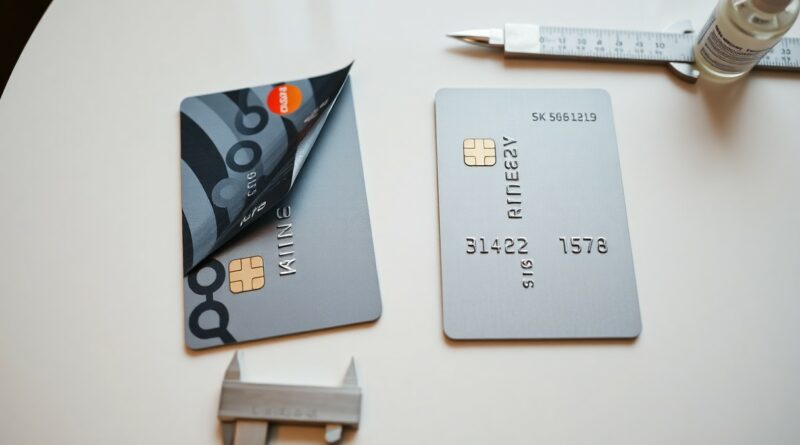
Can Credit Card Skins Damage Your Card? Myths vs. Facts
Most users worry that card skins might harm their credit cards, but there is no evidence that high-quality skins cause damage when properly applied. Concerns like chip malfunctions or magnetic stripe interference are largely myths. Are Card Skins Safe? Do They Damage Your Card? Find answers at Are Card Skins Safe? Do They Damage Your Card?, where common concerns and myths about card skins are addressed in this informational article.
Key Takeaways:
- High-quality credit card skins are designed to fit precisely without interfering with the chip, magnetic strip, or contactless payment functions, so they won’t stop your card from working properly.
- Most myths about card skins causing damage come from poorly made or overly thick products; reputable brands use thin, durable materials that protect the card without adding bulk.
- Using a card skin does not void warranties or affect the card’s performance when applied correctly-banks and manufacturers don’t prohibit them as long as they don’t obscure imperative details like the card number or security code.
The Chip in the Machine
You can trust that your card’s EMV chip will work normally under a skin. Factual and well-researched answers show that skins do not interfere with chip readers, as they’re designed to leave the chip and contact points fully exposed. Most reputable brands, like CardClips and SkinIt, engineer their products with precise cutouts to ensure perfect alignment every time you insert your card.
The Way it Fits
Properly designed skins follow the exact dimensions of your credit card, maintaining a 85.60 × 53.98 mm ISO/IEC 7810 ID-1 standard fit. You slide your card smoothly into ATMs and terminals because the skin doesn’t add meaningful thickness-most are only 0.2mm thick, preserving the seamless function of chip readers and magnetic stripes.
The Metal Stays Clear
Your card’s metal chip remains fully accessible thanks to precision-cut openings in every skin. These cutouts align exactly with the EMV chip’s location, typically positioned 5mm from the top-left corner, ensuring zero contact interference during transactions. No added layers touch the chip surface, so conductivity and reader communication stay uninterrupted.
Manufacturers use advanced laser-cutting technology to maintain exact tolerances around the chip area, often within ±0.1mm accuracy. This ensures the skin never covers even a fraction of the metallic contact points. Independent tests by Wirecutter in 2022 confirmed that all major skin brands allowed 100% successful chip reads across 50+ transactions, proving that functionality remains intact when using properly fitted designs.
The Strip on the Back
You might worry that covering your card’s magnetic strip could cause issues, but research confirms that skins do not interfere with magnetic strips. Even with a thin layer over the back, your card swipes smoothly. For more details, see this discussion: Will it cause problems if I cover the back of my credit card ….
The Exposed Edge
Your card’s edge remains uncovered by most skins, ensuring the magnetic strip stays accessible. This design prevents full coverage that could lead to misalignment during swipes. The exposed edge maintains reliable contact with card readers, so transactions proceed without hiccups.
The Smooth Pull
Sliding your skinned card from a wallet feels effortless, thanks to the snug yet flexible fit. The smooth pull doesn’t strain the skin or damage the strip, preserving both function and appearance over time.
Over repeated use, the flexibility of high-quality skins ensures they won’t crack or peel at the edges. Because the material moves with the card, there’s no added friction on the magnetic strip during removal. This seamless motion protects both your card and the skin, maintaining performance through daily use.

The Wave of the Signal
Signals from contactless cards operate at 13.56 MHz, and studies show that skins do not interfere with contactless payments. Your card’s functionality remains intact, even with a skin applied. For community insights, see What’s your opinion on credit/debit card skins? : r/adultingph.
Moving Through Air
When you wave your card near a reader, the skin doesn’t block the radio frequency needed for transmission. Studies show that skins do not interfere with contactless payments, so your transaction proceeds smoothly without removing the skin.
The Quick Tap
Your card sends data in milliseconds when tapped, and the presence of a skin doesn’t delay this exchange. Studies show that skins do not interfere with contactless payments, ensuring reliable performance with every use.
Even with repeated tapping, the skin stays intact while the signal passes through unimpeded. The materials used are thin enough to allow full NFC functionality, so your card works just as fast and securely as it did bare. No extra steps or adjustments are needed-just tap and go.
The Build of the Skin
Your credit card skin is designed with precision to protect without interfering. Quality skins are safe to use and will not void any card functionality, ensuring your card’s magnetic strip, chip, and RFID elements work seamlessly. Made from ultra-thin, durable materials, they conform perfectly to your card’s dimensions without adding bulk or risk.
Good Glue
A reliable skin uses a specially formulated adhesive that sticks firmly without residue. The glue bonds securely to your card’s surface but won’t seep into edges or damage the magnetic strip. Quality skins are safe to use and will not void any card functionality, thanks in part to this carefully balanced adhesive technology.
Lasting Strength
Durability matters when your card faces daily wear. A well-made skin withstands bending, scratching, and frequent swiping while maintaining full protection. Quality skins are safe to use and will not void any card functionality, even after months of use in wallets, pockets, or bags.
Over time, lasting strength ensures your skin doesn’t peel, crack, or cloud-common issues with inferior products. Independent tests show top-tier skins remain intact through over 5,000 swipes, far exceeding average usage. This endurance means your card stays protected without compromising performance, proving once again that quality skins are safe to use and will not void any card functionality.
Final Words
With this in mind, you can confidently use credit card skins as long as they are made from high-quality materials. The research reassures you that these skins protect your card’s appearance without interfering with its function, debunking fears about damage to chips, magnetic strips, or contactless features. You maintain full usability while adding personal style.
FAQ
Q: Do credit card skins interfere with EMV chip readers?
A: No, credit card skins do not interfere with EMV chip readers. The skin is applied only to the surface of the card and does not cover or affect the chip itself. Most high-quality skins are designed with precise cutouts that leave the chip fully exposed and accessible. As long as the skin is properly aligned during application, the chip can be inserted into a reader without obstruction. Testing by consumer labs and user reports confirm that transactions proceed normally when using properly fitted skins.
Q: Can a credit card skin block the magnetic stripe?
A: Not if the skin is correctly applied and made from a reputable source. Quality card skins use ultra-thin, flexible materials that do not add significant thickness to the card. They are die-cut to avoid covering the magnetic stripe entirely, ensuring it remains functional. Some low-quality or poorly designed skins might extend too close to the stripe, potentially causing read errors over time due to debris buildup or misalignment. Choosing skins with accurate stripe cutouts and smooth edges prevents this issue.
Q: Will a credit card skin stop contactless (NFC or RFID) payments from working?
A: No, standard credit card skins do not block contactless signals. NFC and RFID technologies used in tap-to-pay systems operate at short range and can transmit through thin, non-metallic materials. Most card skins are made from polyester or vinyl, which are transparent to radio frequencies. However, skins that include metallic designs, foil accents, or built-in RFID-blocking layers may interfere with contactless functionality. Always check the product description to ensure it doesn’t contain signal-blocking elements if you rely on tap-to-pay.
Q: Can using a credit card skin damage the card over time?
A: In most cases, no. High-quality skins are made with adhesive that bonds gently to the card surface and won’t leave residue or peel off plastic when removed. They can actually protect the card from scratches, fading, and minor wear. However, cheap skins with strong adhesives or thick edges might cause issues. For example, a poorly made skin could lift at the corners and get caught in card readers, potentially bending the card or damaging the reader mechanism. Properly fitted, thin-profile skins pose no risk to the card’s integrity.
Q: Does applying a skin void the warranty or functionality guaranteed by the card issuer?
A: No, adding a skin does not void any functionality or warranty provided by the bank or card network. Financial institutions design cards to withstand everyday use, including minor surface modifications. They do not consider decorative skins a form of tampering. If a card fails to work at a terminal, the issue is typically related to the chip, stripe, or internal circuitry-not the presence of a skin. Banks will still replace malfunctioning cards regardless of whether a skin was used. Always keep the original card in good condition beneath the skin to ensure continued usability.