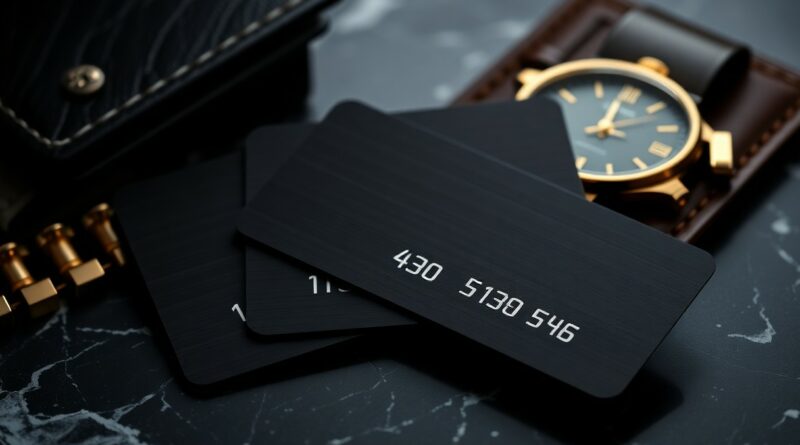
Black Metal Credit Cards – The Ultimate Status Symbol or Overhyped Gimmick?
You hold a sleek black metal card, and instantly, perceptions shift-banks market these as symbols of exclusive access and financial power. Yet behind the prestige, you face high annual fees and benefits that often mirror premium-but less flashy-plastic alternatives. You must weigh the real value against the image.

Key Takeaways:
- Black metal credit cards thrive more on image than substance, using sleek design and exclusive branding to project wealth and status, even when the actual financial benefits are only marginally better than premium-but less flashy-plastic alternatives.
- The perceived prestige of cards like the Amex Centurion or J.P. Morgan Reserve often outweighs their practical value, with high entry barriers and steep annual fees that may not be justified for users who don’t fully utilize concierge services, airport lounge access, or travel credits.
- Issuers leverage psychological appeal-scarcity, mystery, and social signaling-to market black cards as elite symbols, but consumers should weigh tangible rewards and personal spending habits before equating metal with value.
The Genesis of the Heavy Metal Fetish
Black metal credit cards emerged from a calculated blend of exclusivity and psychological allure, tracing back to American Express’s 1999 launch of the Centurion Card-commonly dubbed the “Black Card.” You’re drawn to its mystique: invitation-only access, rumored minimum spending of $250,000 annually, and a perception of elite status. The weight, the dark finish, the silence of approval it commands-these aren’t accidents. Brands exploit sensory appeal and scarcity to trigger desire, turning plastic into trophies. While some claim metal cards offer durability, most are the best metal credit cards that look great and help you save, their real power lies in symbolism, not savings. You don’t carry one for the rewards-you carry it because you’re seen.
The Weight of the Ego
You feel it the moment the card lands in your palm-the heft of the metal, the muted “plunk” against the table. That sensation isn’t accidental. As How a credit card’s ‘plunk factor’ became a millennial status … reveals, the 2024 Fortune report confirmed what many already knew: this physical presence feeds the ego. Your black metal card isn’t just payment-it’s performance.

The Plastic Reality Check
You might expect extraordinary perks from a card marketed as elite, but the Amex Centurion “Black Card” requires a $10,000 initiation fee and $5,000 annual fee, with invitation-only access. In return, you receive concierge service, travel insurance, and airport lounge access, benefits many premium standard cards also offer. Some Black Metal cards, like the JPMorgan Reserve Core Card, provide 5x points on travel and dining, yet demand a $1,500 annual fee. Real advantage? Exclusive event access-such as Sotheby’s auctions or F1 experiences-but only if you’re already ultra-high-net-worth. For most, the tangible benefits rarely justify the cost or hype.
The High Cost of Looking Rich
You’re paying $2,500 or more annually for a What Is a Black Card, and Who Qualifies For One?-a steep price just to say you own one. The prestige factor might impress at dinner parties, but annual fees like these demand real value. You’ll need to spend heavily just to break even, let alone profit from rewards. Is the status worth it when the cost is built into every transaction?
The Battlefield of Titanium
You’re comparing the Apple Card, launched in 2019 with a minimalist titanium design, against Chase Sapphire Reserve’s heavier stainless steel build introduced in 2016. The Apple Card offers no physical numbers for enhanced security, while Chase includes concierge and travel credits valued at $300 annually. Amex Centurion, forged from anodized titanium since 2003, remains invitation-only, symbolizing exclusive access few attain.
Summing up
The Black Metal Credit Cards offer access to exclusive concierge services, $10,000 minimum credit limits, and invitations to private events with brands like Rolex and Sotheby’s, positioning them as elite financial tools. You weigh prestige against practicality-annual fees exceed $600, and benefits often favor high spenders. Your lifestyle determines whether it’s a status symbol worth holding or just a flashy perk with limited reach.
FAQ
Q: What exactly are black metal credit cards, and why are they called “black cards”?
A: Black metal credit cards are premium financial products made from metal instead of plastic, often associated with high-end lifestyles and exclusive access. The term “black card” typically refers to invitation-only cards like the American Express Centurion Card, which launched the trend in 1999. These cards are usually reserved for high-net-worth individuals with exceptional credit and spending habits. Over time, the “black card” label has expanded to include any premium metal card, even those available to the public, such as the Chase Sapphire Reserve or Capital One Venture X. The dark, metallic design signals exclusivity, and issuers use the aesthetic to reinforce a sense of luxury and status.
Q: Do black metal cards offer real financial benefits, or is it mostly about image?
A: Black metal cards combine tangible benefits with strong branding. Most offer high rewards rates on travel, dining, and everyday purchases, along with perks like airport lounge access, travel credits, and concierge services. For example, the Chase Sapphire Reserve provides a $300 annual travel credit and 3x points on travel and dining. However, these benefits come with steep annual fees-often $550 or more. For frequent travelers who maximize credits and rewards, the math can work. For others, the perks may not offset the cost. The metal build and sleek design don’t improve functionality but serve as psychological markers of success, making the card feel more valuable than standard plastic.
Q: Are black metal credit cards really harder to get than regular cards?
A: Access varies by card. True “black cards” like the Amex Centurion are invitation-only and require a history of high spending, often $250,000+ annually on other Amex cards. Approval also depends on income, credit score, and banking relationships. In contrast, many metal cards marketed as “black” are available to anyone who qualifies through a standard application. Cards like the SoFi Credit Card or the Apple Card (metal version) don’t require ultra-high income. The exclusivity is more about perception than reality for most metal cards. Issuers use the metal material and dark color to mimic elite status, even when the barrier to entry is relatively low.
Q: Why do banks use metal instead of plastic for these cards?
A: Metal makes the card feel substantial and durable, reinforcing the idea of premium quality. The weight and texture create a sensory experience that plastic can’t match. Psychologically, holding a metal card can boost a user’s sense of achievement and confidence. Banks also benefit-metal cards are harder to cancel impulsively because they feel more permanent. The material deters casual use and aligns with a luxury brand image. However, metal can cause issues: it’s heavier to carry, can scratch other items in a wallet, and may interfere with RFID signals. Some users report that metal cards wear down faster at the magnetic stripe or chip contact points.
Q: Is the prestige of a black metal card worth the annual fee?
A: That depends on how you use it. If you travel often, dine out regularly, and can fully use the included credits and lounge access, a card like the Capital One Venture X ($395 annual fee) can return $700+ in value each year. For someone who rarely travels or doesn’t spend heavily, the same card offers little advantage over a no-fee rewards card. The prestige factor is real-some people report better treatment at hotels or restaurants when handing over a metal card. But that social benefit is subjective and inconsistent. The card won’t change your financial standing, and flaunting it can backfire. Ultimately, value comes from usage, not appearance. A black metal card is not inherently better-it’s just louder.