
The Role of Payment Cards in Luxury Lifestyle Branding {Brand strategy article connecting cards to travel, concierge, and status perks.
Just as payment cards extend your brand into daily life, they convert transactions into narratives of exclusivity and service: exclusive travel, white‑glove concierge and symbolic status that shape perception and loyalty; they also carry privacy and reputational risks if poorly managed, so your strategy must align product design, partner experiences and messaging to protect value and amplify desirability.
Key Takeaways:
- Payment cards serve as tangible brand touchpoints that signal prestige and integrate travel, concierge, and status perks into everyday use, reinforcing aspirational identity.
- Partnerships with airlines, hotels, and concierge providers amplify experiential value and drive retention by delivering exclusive travel benefits and curated services.
- Card-linked data enables personalized luxury offers and measurable ROI, helping brands optimize perk tiers, pricing, and monetization through partner networks.
The Evolution of Payment Cards in Luxury Branding
Over the last seven decades you’ve seen cards shift from checkout tools to brand statements: Diners Club (1950) introduced the charge model, BankAmericard (1958) evolved into Visa (1976), and American Express Centurion (1999) codified invitation‑only prestige. Issuers now design plastic and digital credentials to embed travel, concierge, and status perks, turning your card into a daily reinforcement of lifestyle positioning and access.
Historical Context
Initially your card was about payment efficiency, but travel‑centric marketing changed that: Diners Club targeted frequent travelers in 1950, AmEx expanded travel and concierge services through the late 20th century, and banks introduced premium private cards in the 1990s. By the 2000s luxury issuers were packaging lounge access and dedicated service teams so your card signaled both privilege and preferred treatment.
Current Trends
Today you encounter premium fees that underwrite tangible benefits: Chase Sapphire Reserve ($450) debuted in 2016 with a $300 travel credit, while American Express Platinum (~$695) bundles Centurion Lounge access and concierge services. Co‑branded hotel and airline cards now offer elite fast‑tracks and free night credits so your spend converts directly into status and experiences.
Meanwhile you benefit from digital and partnership innovations: virtual card numbers, tokenization, app‑based concierge, and broad lounge networks like Priority Pass or Centurion Lounges. Issuers use spending data to deliver targeted upgrades, complimentary elite tiers after spend thresholds, and localized offers-making your card both a revenue generator and a finely tuned brand touchpoint.
The Connection Between Payment Cards and Travel Perks
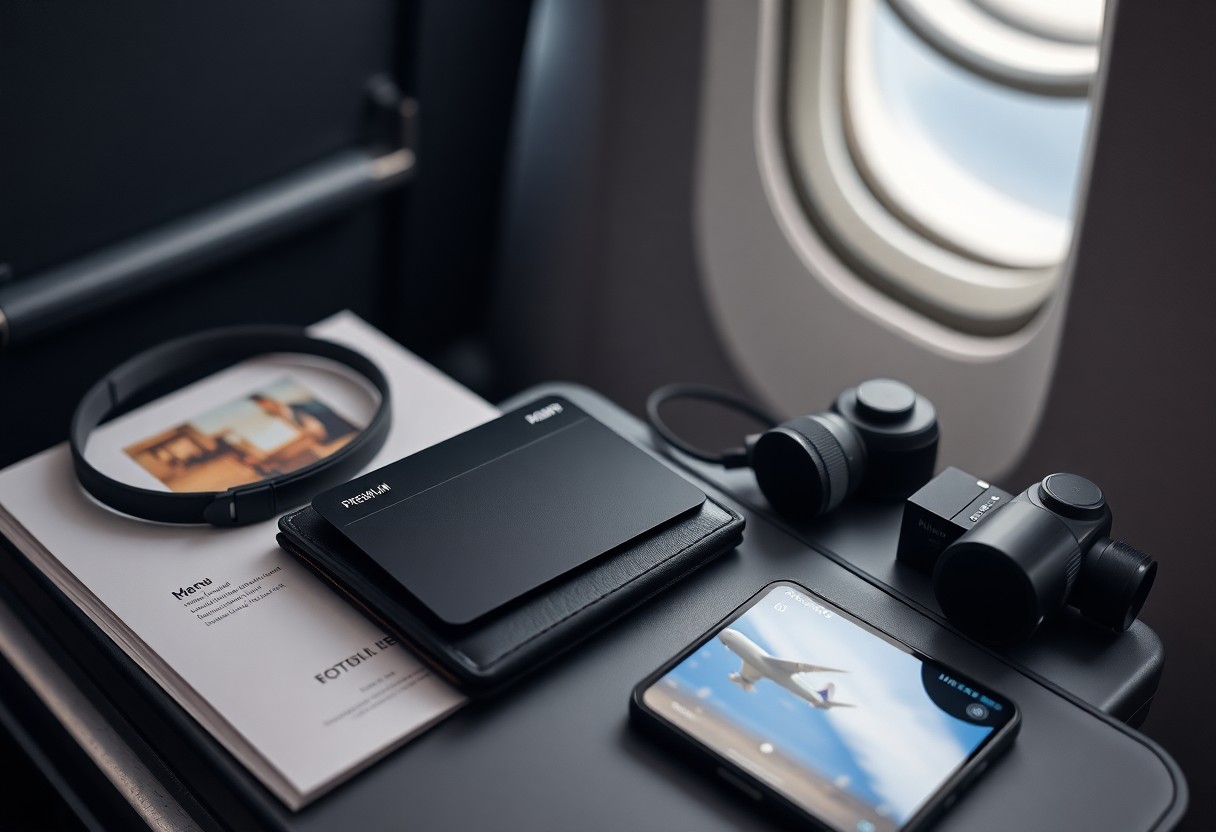
Cards act as both payment tools and travel gatekeepers: premium products like the American Express Platinum, Chase Sapphire Reserve and Visa Infinite bundle airport lounge access, $200-$300 annual travel credits, and elite-status fast tracks, shifting how you book and experience trips. You gain tangible value through upgraded rooms, priority boarding, and trip protection; brands leverage those perks to signal status while you redeem points, credits, and partner benefits that can exceed the card’s annual fee when used strategically.
Exclusive Travel Experiences
Card programs increasingly curate one-off experiences-private dinners, sold-out event access, and bespoke itineraries-often arranged by in-house concierges or partners like Virtuoso. You can secure private transfers, villa upgrades, or guided excursions that typically cost thousands, with many premium cards offering these as complimentary or heavily discounted perks, reinforcing the sense of exclusivity and making your travel narrative part of the brand promise.
Partnerships with Airlines and Hotels
Co-branded cards (Delta SkyMiles AmEx, United Explorer, Marriott Bonvoy cards) and transferable-point products create direct value: you get free checked bags, priority boarding, upgrade certificates, and accelerated elite status that translate to better seats and rooms. You benefit from point transfers and award bookings; for example, Chase Ultimate Rewards transfers 1:1 to World of Hyatt, enabling high-value redemptions at luxury properties without cash outlay.
Digging deeper, transferable currencies and co-branded perks let you engineer outsized value: a 60,000-point sign-up or transfer can often cover a transatlantic business-class seat or multiple nights at top-tier hotels. You should track transfer ratios and periodic transfer bonuses (commonly 10-40%), use upgrade certificates wisely, and pair annual travel credits with partner bookings to convert card fees into net gains while strengthening brand loyalty through repeated premium experiences.
Concierge Services and Payment Cards
Premium cards turn concierge offerings into a clear differentiator: issuers like American Express, Visa Infinite and Mastercard World Elite pair 24/7 access with curated partners so you can secure sold‑out events, last‑minute reservations or helicopter transfers. Issuers justify steep fees (for example, AmEx Platinum at $695) by delivering that white‑glove convenience, while you should weigh the upside against data sharing and privacy trade‑offs when authorizing personal profiles for service delivery.
Personalized Assistance
When you engage concierge, a personal profile captures preferences-dietary needs, bed type, favorite hotels-so requests are proactive rather than reactive. Service agents translate those details into bookings, whether arranging a Michelin table or sourcing a specific vintner’s bottle; this one‑to‑one support reduces back‑and‑forth and raises perceived exclusivity, especially when agents escalate requests through partner networks for outcomes you couldn’t secure solo.
Enhancing Customer Experience
Concierge plus card-linked hotel programs (AmEx Fine Hotels & Resorts, Visa Luxury Hotel Collection) deliver tangible guest benefits-noon check‑in, room upgrades when available, daily breakfast-that directly improve stays. You experience fewer friction points during travel, and those consistent perks build loyalty by turning routine bookings into elevated moments you associate with the card brand.
Digging deeper, concierge services streamline complex logistics you’d otherwise manage yourself: expedited visas, airport fast‑track, bespoke ground transfers and on‑demand local fixes. By handling these tasks-often saving you hours per trip-the service both reduces friction and creates measurable ROI for issuers through higher card spend and longer retention, while giving you time and peace of mind as the primary value exchange.
The Role of Status and Prestige
You expect premium cards to act as badges: metal construction, invite-only issuance, and elevated annual fees communicate standing. American Express’s Centurion (invite-only) and Platinum ($695 annual fee) show how card design and exclusivity translate into perceived prestige, while banks deploy co-branded travel benefits and private events to reinforce that identity. Issuers design these cues so your card becomes a visible signal to peers and partners.
Brand Perception and Loyalty
When your card delivers tangible perks-lounge access, elite status matches, and concierge services-you form stronger loyalty: AmEx Platinum’s lounge network and credits keep members renewing despite the fee. Co-branded airline and hotel cards steer your bookings by offering upgrades and recovery guarantees, so you funnel travel spend to the issuer that consistently improves your experience and reduces friction.
The Psychology of Luxury Spending
Your willingness to buy into premium cards hinges on signaling and cognitive biases: status signaling, price-quality heuristic, and loss aversion make exclusivity feel valuable. Visible cards and white-glove services trigger social recognition and lower perceived purchase risk, so you’re more likely to accept higher fees when the card visibly enhances your lifestyle and decision confidence.
Behaviorally, you succumb to the endowment effect and the sunk-cost fallacy: after paying a high fee or receiving an exclusive invite, you value the card more and increase usage to justify ownership. Issuers mirror loyalty tiers-card-driven Gold/Platinum hotel status or airline elites-so your identity aligns with partner brands; practically, that drives repeat bookings, higher ancillary spend, and stronger defense of the card as part of your personal brand, which amplifies retention and lifetime value for issuers.
Case Studies of Successful Luxury Card Brands
You can observe how leading luxury cards monetize exclusivity and service: Amex and Chase convert high annual fees into measurable travel credits and lounge access, while invitation-only programs leverage bespoke concierge and visible status perks to retain affluent customers and justify premium pricing.
- American Express Centurion – invite-only; reported initiation fee of roughly $7,500 and annual fee around $2,500; offers 24/7 personal concierge, elite hotel & airline upgrades, private events; positioned as a high-visibility status perk for global UHNW consumers.
- American Express Platinum – annual fee $695 (2024); includes up to $200 airline credit, airport lounge networks, Fine Hotels & Resorts upgrades and travel protections; designed to drive frequent-travel spend and premium co-brand partnerships.
- Chase Sapphire Reserve – annual fee $550; $300 annual travel credit, Priority Pass access, 3x points on travel/dining; launched 2016 and used aggressive travel credits to rapidly grow premium cardholder spend and retention.
- J.P. Morgan Reserve – available to Private Bank clients with >$10M AUM; annual fee reported near $595 (often waived for clients); emphasizes bespoke financial service integration, dedicated concierge, and metal card aesthetics as a portfolio-level status perk.
Brand Analysis
You should map each program to a clear revenue and perception play: Amex bundles transferable points and partner access to justify a $695 fee, Chase uses the $300 travel credit to drive acquisition and spend, Centurion trades ultra-exclusivity for aspirational branding, and J.P. Morgan ties card access to client AUM to deepen wealth relationships.
Lessons Learned
You can take three rapid lessons: price against perceived value so the fee feels earned, use high-touch concierge and partner perks to lock behavior, and ensure exclusivity scales without eroding margins; otherwise high fees become a liability.
In practice, you’ll test mechanics: model how a $550-$695 fee offsets delivered benefits (e.g., $200-$300 in travel credits plus lounge access) and how interchange, interest, and cross-sell lift lifetime value. Monitor unit economics closely-if loyalty costs exceed incremental revenue, reduce perk breadth or raise entry hurdles. Also, treat visible status perks as marketing: metal cards, invitation rarity, and curated events amplify word-of-mouth but require disciplined fulfillment to avoid negative experiences that damage the brand.
Future Trends in Luxury Payment Solutions
Expect premium cards to prioritize seamless, experience-first payments: tokenization and biometric authentication will secure transactions while embedded booking engines let you complete a flight, upgrade, and charge a villa in one tap. For example, Visa and Mastercard pilots for fingerprint cards and wide token adoption lowered card-not-present risk; simultaneously, card issuers are bundling carbon-offset options and curated travel access to keep your wallet both secure and aspirational.
Innovations in Payment Technology
You’ll see more virtual single-use numbers, on-device wallets integrated with concierge APIs, and IoT-enabled payments – Mercedes and BMW pilots show in-car buying gaining traction. Tokenization and hardware-backed secure elements reduce exposure to skimming and replay attacks, while programmable cards via APIs let issuers push instant credits, bespoke offers, or time‑bound access for exclusive events directly to your device.
Evolving Consumer Expectations
Higher-fee cards ($500-1,000+) now have to prove ROI: you expect immediate upgrades, real-time travel recovery, and sustainability options at checkout. American Express’s Fine Hotels & Resorts and similar hotel collections set the bar by delivering upgrades, daily breakfast, and guaranteed late checkout that make the annual fee feel like an investment in experiences.
To meet you where you are, issuers must deploy AI-driven personalization that surfaces the right benefit in the moment – think targeted upgrade offers at check-in or instant lounge access when a delay’s detected. Brands should also adopt strict privacy-by-design controls and transparent data-use policies to mitigate fraud exposure and reputational risk, while expanding partner ecosystems (luxury hotels, private aviation, sustainable travel providers) to convert benefits into measurable, repeatable value for you.
Final Words
With this in mind, you should view payment cards as strategic brand touchpoints that extend your luxury offering into travel, concierge and status perks; they signal identity, enable privileged experiences, and deepen loyalty. Design, benefit packaging and service partnerships shape how your clientele perceives value-see how leading issuers blend aesthetics and utility in The New Luxury in Payments: Crafting Cards with Style and Substance for practical cues to refine your brand’s card strategy.
FAQ
Q: How do premium payment cards reinforce a luxury brand’s positioning?
A: Premium cards act as a physical and digital extension of brand identity through design, materials, and member communications. Card aesthetics (metal finishes, embossing, exclusive numbering) convey craftsmanship and scarcity, while co-branded benefits-curated travel partnerships, invite-only events, bespoke concierge services-signal privileged access. Behind the scenes, card-linked data enables tailored offers and personalized messaging that deepen emotional connection with high-value customers, supporting premium pricing and aspirational brand perception.
Q: In what ways do travel and concierge perks delivered via cards drive acquisition and loyalty?
A: Travel perks (airport lounge access, elite status fast-tracks, upgrade credits, travel insurance) and white-glove concierge services (priority reservations, bespoke itineraries, access to sold-out experiences) create tangible, repeatable value that encourages frequent use and higher spend. These perks act as acquisition hooks when showcased in partnerships and social proof, and as retention levers by increasing switching costs and embedding the card into customers’ lifestyle routines. Measured activation of perks and positive experiential anecdotes amplify word-of-mouth among affluent networks.
Q: What metrics and governance practices should brands use to ensure card programs enhance luxury positioning without diluting exclusivity?
A: Track qualitative and quantitative indicators: activation and redemption rates for premium benefits, incremental share of wallet, customer lifetime value, NPS among cardholders, and sentiment in earned media. Complement metrics with program governance: tightly curate partner selection, enforce service-level standards for concierge experiences, maintain tiered scarcity (limited-issuance or invitation-only tiers), and apply strict data privacy and personalization guardrails. Regularly review offerings against brand values to avoid over-extension and preserve perceived exclusivity.